
BEFORE YOU BUY
Choose with your ears, your hands, and good information.
A good piano purchase fits the player, the space, the instrument’s condition, and the budget. Brand alone cannot answer all of those questions.
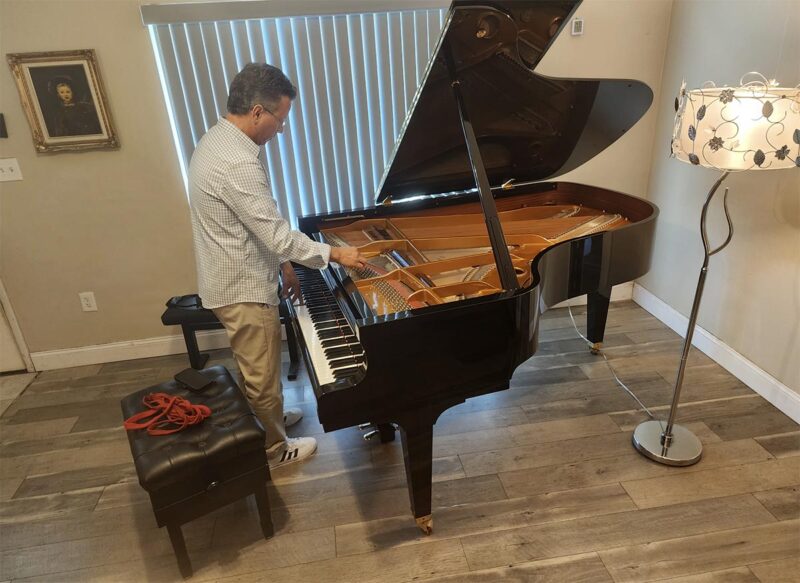
Begin with how the piano will be used
Consider who will play it, the level of playing, available space, and your long-term plans. A family practice instrument and a piano for demanding performance may lead to different priorities.
Listen and play more than one instrument
Tone and touch are personal. Try a range of notes and dynamics, and compare instruments when possible. Two pianos with the same name on the fallboard may feel and sound different because of condition and preparation.
For a used piano, look beyond appearance
A clean cabinet does not establish the condition of the action, strings, tuning pins, or structure. A piano that needs extensive work may cost more overall than its purchase price suggests.
Consider an independent inspection
Before committing to a used instrument, ask an experienced technician about an assessment. Discuss mechanical condition, tuning prospects, likely service needs, and whether the piano suits your expectations.
Plan the full cost
Allow for professional moving, placement, initial service, and ongoing care. Share the make, model, age if known, photographs, and location when asking me for advice about a potential purchase.
LET’S TALK ABOUT YOUR PIANO
Personal advice starts with a conversation.
Share your city, piano make and type, last tuning date, and anything you’d like improved.